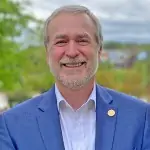
 President David Johns
(September 29, 2021)
I spent many of my after school evenings at the Greentown Branch Library. I really don’t remember how it started or why I gravitated there; there was no formal program, no academic intervention, no outreach to poor kids in the neighborhood; but, for some reason, the library is where I wanted to hang out.
Greentown is a few miles from the Pro Football Hall of Fame and Interstate 77, and close enough to the Akron-Canton Airport that we could smell smoke from the wreckage when New Yankee catcher, Thurman Munson, crashed his Cessna Citation there in August 1979.
You could see the library from my school playground. It was tiny, only a few hundred square feet, a single reading room with shelving along the walls and a few freestanding cases stuffed with newspapers, books, and magazines. And, most importantly, I could walk there in less than ten minutes.
Of course, I understand why my parents allowed me to spend countless hours there each week — one less fidgety kid running through the house! But I am not sure why Jean Shelly, the fiercely disciplined, frighteningly stern librarian, put up with me. But she did. In fact, she was kind to me, even maternal, keeping a table always ready for me to spread out all the materials I was exploring.
She pointed me to things that interested me, and then to things that became interesting to me: Al Unser, the Indianapolis 500, magic tricks and biographies of Harry Houdini, stories about the Buddha, world maps, castles, articles about Japan. And mysteries, lots of mysteries like the Hardy Boys, Sherlock Holmes, and especially Ellery Queen, whose ‘Mystery Magazine’ was the first ever subscription I had in my own name.
Miss Shelly was cool, like Morticia Addams is cool; she may have eaten the young of other families in town for all I knew, but she opened the world to me in that diminutive biblioteca, and I loved her for it.
The heavy black rotary phone on her desk sounded the same no matter who dialed the library’s number—except for one. Each evening near closing time, my mother would call—I always knew it was her—and Miss Shelly would tell me it was time for me to go home.
I always carried a treasure back home with me, a book or two that swept me up and drew me in, something that opened my imagination to worlds close at hand and far away. My sisters knew I was back in the house by the familiar sound of a stack of books sliding from my arms, hitting the kitchen table, and fanning out like a deck of cards.
I visited that little place recently, a few days after my father died. Like a lot of things from childhood that we look at with older eyes, it was smaller than I remembered, no bigger than a modest starter home. I haven’t thought about that library for years, so I am not sure why I stopped by then. Maybe I thought the bricks still carried something from those days—a droplet of mystery and adventure, a glimpse of Miss Shelly’s kind and unsmiling face, the ring of a telephone summoning me home.
But all was silent.
No longer a library, it is now a museum, weather-beaten and stuffed inside and out with other types of wonders and curiosities: lightning rods, mailboxes, and hitching posts.
I took a photo in front of the door that opened to me each evening. In my hand I held a book that I could never have read then, but that I wouldn’t be reading today had that once-upon-a-time library not embraced a towheaded boy from Greentown, Ohio with mismatched socks, and a heart hungry for the world.
This column by President David Johns appeared in The Franklin News-Post. President Johns may be reached at president@ferrum.edu.
President David Johns
(September 10, 2021) Anyone who was awake twenty years ago has a Sept. 11 story. Some people hurriedly gathered loved ones close, not knowing what to fear, but fearing it nevertheless. Others spent the day staring at a silent sky, or watching looping video images of the same two planes colliding time and time again into the same two buildings.
For my part, I had just finished reading a Time magazine article I thought was ironic. I walked down the hall to share a laugh with a coworker, ready to add some humor to the least interesting day of the week.
But he was transfixed, listening to a small radio sitting on his desk. Farther down the hall, a similar scene. Within minutes, several of us walked across the street to Clyde’s house, the nearest television we could find. There we sat for the rest of the day wondering when a plane would dive into our town.
The senses we have had since birth–taste, touch, smell, sight, sound–are how we interact with the world and how we know the lights are still on within us. But when fear is acute, these senses either shut down to protect us, or they wake up to protect us.
Mine woke up.
And while in New York City that day smelled like burnt steel, smoke, and cremation, in Richmond, Indiana, it smelled like fresh bread, laundry detergent, and the dusty sofa in Clyde Johnson’s family room.
It really is hard to know how to remember some days, or certain events, or particular people. We know this to be true, because we struggle mightily these days with monuments and memorials, and this reminds us that remembering is not as easy nor as safe as it may seem.
I am conflicted with how to remember this day. Without a doubt we must remember the victims whose lives were crushed between floors of the Towers, incinerated–ashes to ashes–and those who chose to soar rather than meet a fiery end. We must remember the spectacle of twisted steel and the ashen faces of first responders, a new breed of Super Hero that was born out of the rubble of that day.
However, these things–destruction, body count, crowds running in fear–these are images of victory for those whose goal was terror.
Twenty years removed from that day and I believe more strongly than ever that Sept. 11 is not the day we should remember. Sept. 12 is. And the 13th, and Sept. 14, 15, 16, and beyond.
Frankly, I have trouble separating what actually happened on that day from what has been kneaded into my memory through two decades of elaboration. Documentaries, conspiracy theories, cell phone videos, political pontification, and newsreels. What I can say with certainty is that September 11th exposed human cruelty and hatred, but Sept. 12 displayed human resolve and solidarity. One day was a testament to nature ‘red in tooth and claw,’ the other a testament to the ‘better angels’ of this nature.
Of course, I am misremembering and painting with a broad brush of idealism. In the days following the 11th, we heard calls for scorched earth revenge that were as ugly as any terrorist’s invective against the United States, and irrational fear caused us to look at each other with suspicion when we boarded a plane together.
But being lumped together as one by the terrorists actually made us act together as one–mostly, and for a time. It seemed to matter less who was who or what group we represented. We were Americans, dammit, and we would live or die that way!
It did not last long, but it happened–a glimpse long enough to convince some of us that it was real, and if real, then something that could happen again. And, maybe the next time, we would not need to be in the crosshairs of violence to bring it back.
I don’t know. Many days that feels like a utopian fantasy. We are as polarized as we have been for quite some time, and simply being fellow citizens does not seem to be quite enough for us to accept each other as fellow Americans.
Our lives look too much like Sept. 11–filled as they often are with fear, and anger, with twisted steel, and revenge. Twenty Septembers later, and my hope for humanity does not come from remembering that day, but from remembering the days that follow it.
This column by President David Johns appeared in Roanoke Times and The Franklin News-Post. President Johns may be reached at president@ferrum.edu.
President David Johns
(January 6, 2021) One of my teachers used to say that no one should publish a book before turning 50. That was overstated, to be sure. However, J.D. Vance’s “Hillbilly Elegy” is a good example of why memoirists ought to have gray hair.
“Hillbilly Elegy” became a New York Times bestseller shortly after its release in 2016, and it has sold more than 3 million copies. Its soaring popularity is due in part to its portrayal of misunderstood and politically forgotten America, an America that overwhelmingly voted for Donald Trump.
Because of good luck or bad timing, Vance was quickly regarded as a spokesperson for disaffected Appalachia. Yet, his tempestuous family tale sits heavy in the stomach of some he claims to describe.
But, it’s important to note that Vance does not claim to be the voice of Appalachia. He is criticized by some for presenting an universalized view of the area and its people; but really, who in their right mind would ever claim to speak on behalf of an entire region? Vance certainly did not.
Some of his critics published a collection of essays, “Appalachian Reckoning: a Region Responds to Hillbilly Elegy.” This is a book-length tug of war for who can speak truthfully about Appalachia. The essays range from mildly appreciative to excoriatingly Vance-shaming, denouncing the memoir as a deeply flawed, imperfect story that is out of tune and out of touch.
It is true, however, that the public often rushes to stereotype and generalize because it’s easy, and because it has little patience for the complexity of just about everything, including Appalachia, and including 2016. Impatience made “Hillbilly Elegy” something more than it ever should have been: a singular memory of one young man’s family.
The story is now filtered through Ron Howard’s lens, and he fills the screen with poorly drawn caricatures of Appalachia set against a backdrop of beauty, addiction, and poverty. But like most stories we tell, this one is true only in part.
I am projecting my own experience on Vance, I realize, but my background is similar to his. He grew up in Ohio, so did I. His family was from Kentucky, mine was from West Virginia. We both left in the pursuit of education and careers — a law degree for Vance, a PhD for me.
My mother grew up in the hollers near Coburn, West Virginia, where I spent time as a child. Family networks there were tight and extensive; family secrets, which were never secret, ranged from shocking to comic. My maternal side of the family emigrated to Ohio looking for work in the rubber plants in Akron and in the warehouses at the Diebold Safe and Vault Co. in Canton, Ohio, where I was born.
Vance was 32 when Elegy was published, but I will subtract a year or two for writing and shopping the manuscript to publishers, and assume he was 30 years old when Elegy was written.
When I was 30 or 32, I was completely unprepared to tell my family’s story. I was still too angry and ashamed. I was still differentiating from my Appalachian upbringing, a decade away from acknowledging the courage and wisdom of my blue collar family.
Vance may be able to tell his family’s story better than I would have been able to tell mine nearly 30 years ago. I would have been unkind and unfair. Nevertheless, rather than silence his voice, I would like to see Vance tell his story again after he turns 50.
Our perspectives change over time and we make peace in new ways with the people and places we have left behind. We are more measured and more tentative in our generalizations and in our depictions.
I admit, my remarks are more confession than critique. These days I am ashamed for having ever been ashamed of my Appalachian birthright, for having bought into a belief that I had to “move out to move up.”
We lose a lot when we think this way, and I have spent decades recovering what I cast aside so cavalierly as a young man. I cannot and will not say that this is Vance’s experience, but it was mine. For me, admittedly a slow learner, it has taken years to become proud of my Appalachian roots, and to embrace my family, so precious and real and flawed and perfect.
And to let each one of them live inside of me.
This column by President David Johns appeared in The Roanoke Times and The Franklin News-Post. President Johns may be reached at president@ferrum.edu.
(December 8, 2020) I relived the pandemic while packing to move.
Each plate, bowl and glass got its own section of newspaper as I wrapped them and tucked them carefully inside boxes. Coffee mugs wrapped in January’s news — hints of a virus likely to spread widely. Ceramic pitchers padded in February’s announcements of infections and the first U.S. death. Next came bottles of spices and olive oil wrapped in the WHO’s proclamation that the virus had reached pandemic scale. Then came lockdowns, layoffs, business implosions and, finally, some promise of light at the end of the tunnel.
We went into the new year as we usually do, full of hope, ready for challenges and opportunities. And, we found both.
Like everyone else, I am ready to say good riddance to 2020. However, when we step back for a moment and reflect, it’s remarkable what we have learned and what we have accomplished.
First, we have learned that we are stronger than we thought we were, and that we are even stronger when we work together.
Each of us has strength we didn’t know we had. We didn’t need it, quite frankly, until this year, but when circumstances pinned us into a corner, we found determination and creativity sufficient to move forward. We discovered, in the midst of enormous challenge, what Thomas Edison meant when he said: “When you’ve exhausted all possibilities, remember: you haven’t.”
Second, we learned that we need very little to survive.
Throughout the pandemic, we have pared back many of the activities that filled our lives last year. We have spent less money on some of the odds and ends we generally give away or throw away. While we might miss some of these things and some of these activities, and while we may be eager for their return, we are fine. We have survived, and we are not diminished.
Third, we have learned we can work, learn and play at a distance.
Not all work, I realize, nor all learning, nor all play. But with imagination and willingness, we have been able to do more than we thought we could back in March. Fears that technology would isolate us from each other are unfounded. Had this pandemic occurred 30 years ago, we would have been isolated from each other for days on end. However, in 2020, we were able to quarantine and at the same time keep many aspects of life moving along.
And finally, we have learned that friends and family really are what matter most.
As the pandemic chiseled away at our social calendars, our work schedules and our weekend plans, many of us found ourselves reconnecting with a core circle of friends. We realized that the people who know us best and love us most were the ones who could help us stay balanced and keep our lives in perspective during these unusual times. Travel restrictions and limited crowd mandates did not prevent us from finding ways to stay close.
Wrapping dishes in back issues of newspapers gave me a whirlwind review of how far we have come in just a few months. It was strange to read articles from February and March having already lived through September and October. We know now what we did not know then, but we do not know today what lies ahead in February 2021, or April, or ….
We live our lives forward, as Soren Kierkegaard said, but only understand them in reverse. So, we need to be content to know very little. Yet, we can all hold on to what we have learned, those things that have carried us up to this point and that can, I believe, carry us farther still. We are stronger than we could ever have imagined, and even stronger together; we need very little to survive; we can work, learn and play at a distance; and friends and family are really what matter most.
One day, the COVID-19 pandemic will be the stuff of documentaries and history books, and our children will tell stories about it to their children. And soon, someone will wrap dishes in the yellowed pages of newspaper articles that report about vaccines, antibodies, of rebuilding society, and about a world made better because it struggled together.
This column by President David Johns appeared in The Roanoke Times and The Franklin News-Post. President Johns may be reached at president@ferrum.edu.
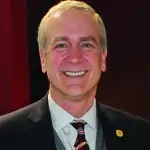 (August 26, 2020) As students move back to college this month, the usual excitement and bittersweet goodbyes are being seasoned with apprehension and whispered prayers.
None of us are naive, we know this is going to be challenging. We know we must take extra precautions. We know everything could turn on a dime at any moment, and we all know it’s not 2019 any longer!
Every one of our schools has developed contingency plans and scenarios ranging from the likely to the apocalyptic. We are well aware that as Theodore Roosevelt once remarked: “Nothing in the world is worth having or worth doing unless it means effort.” Returning to college this fall is going to require effort because, at the end of the day, it is worth it.
And it is worth it for at least three reasons: students, colleges themselves, and the communities in which our colleges are located.
First, no one stands to lose more than students if our colleges do not return to campus activity.
While colleges learned how to serve their students in unfamiliar yet effective ways, and while faculty performed the Herculean task of transitioning to remote instruction, all this has taken a toll that is unsustainable and undesirable.
One third of students in Virginia attend an independent college like Ferrum College. Although many news articles focus on flagship public universities or elite private colleges, most independent colleges have modest resources and depend mightily on tuition dollars and philanthropy.
We enroll a greater percentage of minority students, first generation college students, and students from families with economic need than do the others. This is not a criticism, but it is a fact. Vulnerable women and men are left in the lurch when our campuses are shuttered. Additionally, rebuilding our economy after COVID-19 will require that students continue developing skills of resilience, critical and imaginative thinking, and civic engagement.
Second, the return must work for the sake of colleges themselves.
Colleges are businesses that have a fundamental social mission. During the pandemic, a few have written that any college unable to survive a couple semesters without students on campus should close. This is the most foolish and ill-informed statement anyone could make. No one would suggest that a grocery chain or a clothing manufacturer was irresponsible for needing to sell groceries or clothes to continue operating. That’s what they do. Likewise colleges and universities.
The economic havoc brought about by COVID-19 will destroy many small businesses, and some of these casualties will be colleges. Losing them will cause irreparable harm to freedom and opportunity. Thus, the return to college must work in order to preserve these champions of learning, support, research and culture.
When we reach the other side of this pandemic, we will need an educated and prepared workforce to help rebuild our country and position us for tomorrow. And to prepare these women and men, we need healthy colleges.
Third, the return must work for the communities where our colleges are located.
A college in any town is an economic boon. Many of our independent colleges are located in small towns where they are a major employer. Even a college the size of Ferrum has a $100 million impact in our region. The college helps to sustain business and livelihoods in this area, as do the others in their hometowns.
It is understandable that communities are apprehensive about the return. However, the long-term damage to our communities and to thousands of families will be extensive unless we find a way to make this work.
Let’s face it: unless we are willing to remain in absolute home lockdown–every one of us–for the next 12 months or longer, then we are acknowledging there are other social and economic concerns to be balanced in addition to caring for our health and slowing the virus. We have an obligation to sustain our communities and assure a stable economy.
So, while we know this will be a challenging semester requiring effort from everyone, it will be worth it on several fronts–for our students, our colleges and our communities. The only way for us not to be defeated by COVID-19 is to live, to thrive and to stay focused on things that matter. We must be cautious and conscientious, of course, but we cannot lock ourselves away cowering in fear. This pandemic will destroy us, but only if we permit it.
Hard does not mean impossible.
This column by President David Johns appeared in The Roanoke Times and The Franklin News-Post. President Johns may be reached at president@ferrum.edu.
(August 5, 2020) After COVID . . . What?
What awaits on the other side of COVID-19? We have all thought about it, whether out of weariness or a need to plan ahead. But, while we have imagined it, an answer is nowhere in sight.
It seems premature to ask the question because no one knows where we are on the timeline of the pandemic. If we have a vaccine in early 2021, five or six months from now, then at best we are only half way through. But are we closer to the end of the middle, or God forbid, the beginning? Regardless, it is worth thinking about what lies beyond COVID-19 since, sooner or later, we will be there.
I have two concerns and two hopes as I think about our Post-COVID future.
My first concern is that social distancing will lead to social isolation.
We need to maintain physical distance to slow the spread of the virus. In order to do so, many businesses have sent employees home, schools have transitioned to online instruction, and communities have postponed or canceled events that often bring us together.
But distance leads to isolation when we forget the simple acts of common life. We have learned over the last few months that many of our regular activities and meetings can be conducted virtually. But how can we assure that community life thrives, and how can we be sure we are building a Post-pandemic life worth living?
My second concern is that by the time we reach the other side of COVID-19, we will have become an America fractured beyond recognition. Between daily gaslighting and politicizing this pandemic, a wedge is being driven into an already cavernous divide. The wedge is between two impulses at the heart of the American psyche – compassion for the Other, and individual liberty.
At our best, Americans are generous people. We are present during crises at home and abroad, and we have given much for the sake of others. Yet, Americans can be stubbornly independent, regarding liberty as a license to do anything we want. Generally, we balance both impulses according to circumstance and need, but this wedge causes extremism leaving little room for compromise or restraint.
Yet, in spite of these concerns, I have two hopes.
First, many things that were important a half year ago, seem less so today. The pandemic has kept us close to home, close to family, and close to those things as the center of our lives. Some of what consumed our time and resources, have faded into the background.
It can takes years to achieve the pared down lifestyle thrust upon us in just a few months. While it was uninvited and threw us off balance, we are living reprioritized lives, a little more grounded, and a lot less distracted.
Thus, my first hope is that we maintain this hard eared perspective; if we can, then we will have gained something meaningful in exchange for the havoc this pandemic has brought us.
My second hope is that COVID-19 will renew our commitment to each other and to the common good.
We have been reminded that airborne pathogens do not seek permission before crossing barriers we erect. We have learned that reckless personal conduct causes lasting damage. And, we are learning that simple gestures, like wearing a mask in public, saves lives and slows a virus.
Much of what makes our communities livable, from good roads, to schools and parks, to clean water, to healthcare are goods that benefit us all. Our wellbeing is wrapped up together, so if we want a good life for ourselves after COVID-19, we need to invest in each other. Our lives may run in different directions, but we all breathe the same air.
I’m not sure what lies on the other side of COVID-19, but whatever it is, it will not be something that simply happens to us. That’s not the way the future works. The future is something we create through our passion, our imagination, and our commitment.
So, while it may seem a little early to speculate about what comes after COVID-19, we have work to do now. Allowing isolation and division to flourish will result in a future worse than any pandemic; however, if we stay grounded in what is important and lasting, and if we focus on the goods common to us all, we will build a Post-COVID future worth living.
This column by President David Johns appeared in The Roanoke Times and The Franklin News-Post. President Johns may be reached at president@ferrum.edu.
(June 24, 2020) No words, no official statements, no acts of contrition are sufficient in this moment of our history, because nothing can erase generations of pain and oppression. Nothing we can do will ever undo what has been done.
I am heartbroken by the violence of injustice that results in senseless death decimating families and dashing the hope of mothers who must bury their children.
And I am heartbroken by the violence that erupts when injustice persists and those crushed by its weight cry out, “enough.”
We pass through cycles, it seems, from complacency to consciousness to outrage to acceptance to complacency once again. I want to believe that at some point, in one of the passes through the cycle, we will break free and live more enlightened lives. However, I am afraid that this cycle is a slow spiral with occasional plateaus of improvement.
Perhaps our work is to hasten the movement of the cycle, speed it up and advance us more steadily toward a place of justice and being “one nation under God.”
Without a doubt, colleges and universities have contributed to inequity and injustice through the years, keeping certain groups at the top and limiting opportunity for others. Privileged faculty teaching the children of privilege has assured the continuation of class stratification.
The recent admissions scandals unveiled just how much privilege and legacy stay alive at the hands of an unscrupulous few–an entire shadow industry that profits on keeping the poor and less well connected from advancing.
However, while being far from perfect, our colleges are one of the few places left in society that intentionally bring together people from many backgrounds, ethnicities, religions, and ideological perspectives to discuss, debate, and discover. We don’t always get it right, but the world would be poorer, more monolithic, and less understood without them. In fact, the difficult conversations we need to repair ruptured relations and to build a more just future, are conversations that our colleges could help facilitate–not lead, but facilitate.
Some, like Ferrum College, are leveling the playing field for minority students, those from economic disadvantage, and the women and men who are the first in their family to attend college. Rather than profit from meritocracy, we have launched generations of young people into the middle class and into lives of responsible citizenship.
Today, students at Ferrum College are nearly 50% minority, a much greater percentage than at many of the big brand universities. For decades, the College has provided opportunity when opportunity has been denied, and the lives of thousands of families have been changed for the better because of it. In a concrete and real way–not in empty promises or slogans–we live a motto that calls us to put the welfare of others before our own: “Not Self, But Others.”
No one would ever claim we have it figured out or that we are a community without blemish. We are evolving and certainly have our blind spots. And while we cannot erase the injustices that have befallen people of color, sexual minorities, children of economic need or educational disadvantage, or others who have been shut out and turned away, Ferrum College has been at the forefront of providing opportunity for anyone committed to working hard and for anyone committed to building a future with room enough for us all.
This column by President David Johns appeared in The Roanoke Times and The Franklin News-Post. President Johns may be reached at president@ferrum.edu.
(April 8, 2020) As the coronavirus spread across the globe engulfing community after community, our campus grew more quiet. Students began leaving for home–a dozen one day, a hundred the next. Then, staff members joined faculty by working remotely from their own homes. Like musicians walking off a stage, one by one, during a symphony, the music of campus is now only a whisper.
Spending time on a campus that is eerily quiet gives one a lot of time to think. So, what am I learning from an empty campus?
The first thing I am learning is that I don’t like an empty campus! Nearly every day of the year there is activity here, whether it’s classes, or athletic events, or whether it’s guests participating in one of our many camps. Not having what is so common makes its absence felt all the more strongly.
What am I learning? I am learning that we take each other for granted. From one day to the next, we expect to see the familiar faces of coworkers and students, and that expectation can lead to not paying attention to the present moment. For me, busyness leads to distraction, and distraction to forgetting. And, if what I forget is to acknowledge someone or thank him or her, then it can lead to taking them for granted. On an empty campus, I am painfully aware of the times I forgot to say, “thank you.”
What am I learning from an empty campus? I am learning that buildings, and lakes, and athletic fields, and hiking trails, and farms, and residence halls, mean nothing without people. Our students are the soul of the college. They animate these spaces and give them life. Our staff and faculty are the lifeblood that circulates through every artery of activity and connection. This 700-acre oasis is a place where Ferrum College happens, but it is not itself Ferrum College.
What am I learning? I am learning that, in spite of an empty campus, the soul and lifeblood of this community still exist and still pulse strong! We are living in a diaspora, as a scattered people, but we are a people nevertheless. When love binds a group together, distance cannot divide it. Faculty are conducting classes, advisors are advising, staff meet to plan next steps, trivia night still goes on, and some are sharing a drink during after-hours cocktail parties.
All online.
What am I learning from an empty campus? I am learning how much I miss human touch. Here we shake hands; we hug; we sit together and lean in close for good conversation. We literally breathe each other in. This will happen again; but for now, we touch by keeping in touch.
I am inspired by images from Siena, Italy where residents in lockdown took to their balconies to sing, and by images from Plymouth Meeting, Pennsylvania where neighbors join together for group exercise, all while standing in their own front lawn. Nothing is so powerful that it will forever crush the human spirit. Nothing.
What the world will look like on the other side of this pandemic is anyone’s guess. We can be sure, however, that it will not be what it once was. What we will need — community, connection, determination, imagination — all are simple things, really, but the kind of things that hold life together.
We will need each other as we rebuild our communities, our economy, and our lives. This lesson is everywhere evident, especially in the music of a springtime breeze that moves along the Blue Ridge and out across the silent acres of an empty campus.
This column by President David Johns appeared in The Roanoke Times and The Franklin News-Post. President Johns may be reached at president@ferrum.edu.
(March 4, 2020) There is a lot of talk in Richmond and Washington, D.C. these days about the need for a skilled workforce. Without a doubt, there are gaps in trades and professions that must be filled if we are to build a good future for ourselves and for our children, and must be filled if our country is to be a global economic leader.
To hear some of the discussion, what we need to do is simply to train young people for specific high-demand jobs. In fact, a national campaign is underway, led by the Ad Council, in close association with IBM, Apple and the White House, to promote this very idea and to encourage alternatives to college. We have statewide incentives to fund workforce development, which very often means programs that teach specific skills to match the needs of industry at the present moment.
This is important. However, a skilled workforce is not the same as a prepared workforce.
In all the clamor for skills training something is missing, and that something is a demand that colleges of all types prepare students to be responsible citizens. Women and men who are informed, involved, who act with civility, humanity and who care about the future, they are crucial for the health of our country. Although education may be preparation for good work, it is so much more.
And yet, nearly every day I hear someone questioning or dismissing the value of education (even from among some talking heads who have Ivy League degrees!). It is true, of course, that one can make a living without going to college, although an average college graduate will earn $1 million more in his or her career than an average high school graduate. And yes, $1.5 trillion in student loan debt is too much; however, very few folks seem concerned about the overall amount of consumer debt, which is nine times higher and often leaves us little to show for it.
At the end of the day, if we do not take care of our democracy then having a robust economy is meaningless. Who benefits, after all, if many of our skilled workforce are denied an opportunity to learn about our history and about the ideals that gave rise to this great nation? Who benefits if only a handful of areas of study pay attention to preparing citizens? Who wins if we reject the importance of education that forms such people?
For the benefit of us all, our society needs as many people as possible who can think critically and ask questions, who understand where we came from, and who care about how a free nation should act in order to remain free.
This is why one of the goals of our strategic plan at Ferrum College is to “prepare citizens committed to integrity and service.” It’s because citizenship is the work of us all, and not the work of a few. Every one of our faculty, staff, and students can tell you that we are serious about our motto, “Not Self, But Others,” and that we believe it teaches us how we ought to live.
So, let’s build a strong workforce. Let’s provide women and men the skills necessary to build good lives and a strong economy. And, let’s be sure that our skilled workforce is also a prepared workforce, ready to live free and ready to live as responsible citizens.
This column by President David Johns appeared in The Roanoke Times and The Franklin News-Post. President Johns may be reached at president@ferrum.edu.
(January 29, 2020) Not long ago, I asked a group of prospective students visiting our campus: “Who knows what the word ‘Ferrum’ means?” Many folks who studied the Periodic Table of the Elements in school may remember the answer to what is labeled Fe on the table. One of the gathered students, not too far removed from his high school chemistry class, raised his hand and said with confidence: “Iron. Ferrum means iron.”
And so it does.
Born from the atoms of exploding stars and thrown to the far reaches of the galaxy, iron ore emerges from our planet one of the strongest substances known to us. Iron, and the steel produced from it, has been used to lift cathedral ceilings to the heavens, support our symbol of liberty on Ellis Island, and span the Golden Gate. It is also as common and close at hand as a paperclip or a bicycle.
Iron is tough, strong and resilient.
In our area, the Fe–Ferrum–many of us know well, has for over a century helped build lives that are strong and resilient, tough and ready for whatever lies ahead. And this is more important than we might realize.
Eager to see their student do well, some parents ask me what signs indicate whether they will be successful in college and in life. That question is actually easy to answer. After 30 years of working in higher education, I can say that success is not determined by the school someone attended or how they score on a standardized test. It’s not guaranteed by one’s family of origin or economic privilege.
One of the most important indicators of whether someone will be successful in college and in life is resilience, fierce determination or what we might call ‘grit.’ There are no gimmicks and there are no shortcuts, just a willingness to be 110% in, no matter the cost.
I am convinced that anyone can learn, if she is determined; anyone can succeed, if he picks himself up from failure and tries again; anyone can make a difference, as long as they never give up.
Ferrum means iron, and iron is tough, strong, resilient, and what I noticed as soon as I moved here in 2018, is that this quality is in the DNA of Ferrum College and in the students who study here. This gives me hope, because as I look at the challenges we face in our communities in southwest Virginia and beyond, and as I think about the changes that are part of our future, it is clear to me that we need leaders — and a lot of them — who have this grit, this determination to work hard, to be creative and to seek out solutions to benefit us all. We need women and men who are Ferrum strong.
This column by President David Johns appeared in The Roanoke Times and The Franklin News-Post. President Johns may be reached at president@ferrum.edu.