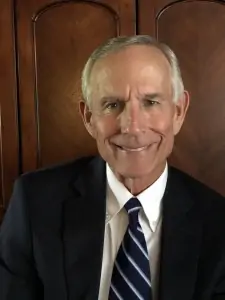
 Ferrum College is excited to announce the creation of the Michael T. Christian ’63 Center for First-Year Experience, made possible by a generous contribution from alumnus Michael Christian.
“I made some friends at Ferrum who were serious students. As a result I became serious about succeeding in college and beyond,” said Christian, who graduated from Ferrum Junior College in 1963.
The Center will serve all incoming freshmen, including those who are the first in their families to attend college. Its goal is to integrate first-year students into college life by connecting them to an academic and social network of professors, mentors, and classmates to help them have a successful college experience. Students will also be connected to other resources at Ferrum College such as clubs, campus engagement, and career services.
“The transition from high school to college can be daunting, especially for the approximately 25 percent of our student body who are the first in their family to attend college,” said Vice President for Institutional Advancement and External Relations Wilson Paine. “The Michael T. Christian ’63 Center for First-Year Experience is designed to make sure our first-year students won’t feel lost as they begin their college journey.”
“The Michael T. Christian ’63 Center for First-Year Experience is the perfect location to study and gather with other students. FYE provides students with a variety of resources to help them perform to their highest potential. These include academic coaching, events, Gateway and Freshmen Orientation courses, and much more,” said First-Year Experience Coordinator Michelle Carter.
After graduating from Ferrum Junior College, Christian went on to earn his bachelors degree from the University of Tennessee-Knoxville. He then commissioned into the United States Army as a second lieutenant and later discharged as a captain. After his military service, he became executive vice president of Nations Bank, now Bank of America, and served as president and chief executive officer of three additional community banks. He also chaired two United Way campaigns and was chairman of the board for Tusculum College. Christian remains involved as a consultant to an east Tennessee regional financial services company and has participated in other civic activities, including previously serving on the board of directors for the Federal Reserve Bank (Nashville branch) and the Tennessee Bankers Association.
“I attribute much of my success to Ferrum,” said Christian. “What I gained there is worth much more to me than the monetary donation I made to the school.”
“We are immensely grateful to Mike for his contribution to the Center,” said Paine. “Every day, he lives by our motto, ‘Not Self, But Others’, and is a true champion for Ferrum College students.”
Read more about the Michael T. Christian ’63 Center for First-Year Experience here.
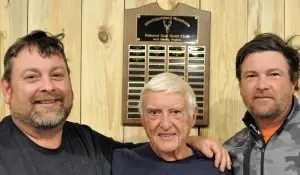
In fall 2019, Litton received the Distinguished Member award from Nimrod Hall Hunt Club, of which he had been a member for years. In this photo, he stands proudly with his sons Jason (on Litton’s right) and Sean (on his left). John Payne photo.
On June 6, 2020, at the age of 80, former Ferrum College Professor of Biology Sam Litton passed away.
Litton played high school football at Andrew Lewis High School and then enrolled in Elon College where he earned his bachelors degree. He then enlisted in the U.S. Navy as a corpsman and completed a tour in Vietnam as a medic while serving in the Marines. After discharging from the military, Litton earned his Master of Science in biology from Appalachian State University, and then received his doctorate from the University of Virginia. He married Joan in 1972 and began teaching biology at Ferrum College shortly afterward.
Litton, Joan, and their sons Sean and Jason, spent much of their time traveling all over the United States and Canada. They took students on field trips as near as the Virginia mountains, and as far as the Virgin Islands.
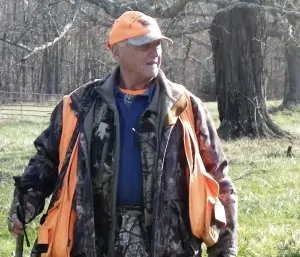
“He was hunting in this photo, yes. But he was also teaching,” said John Payne, Litton’s former mentee. “He never stopped teaching.”
John Payne photo.
Litton’s friends and colleagues remember him as a professor who created real bonds with his students. “Sam was gifted at connecting with his students. He took them under his wing and mentored them, not just with academics, but with non-academic issues, also,” said former Ferrum College Professor of Biology Ron Stephens. “To describe him as a ‘father-figure’ isn’t enough. He served as a true friend they could trust.”
Litton freely gave his knowledge and time. In 1979, a Ferrum College student wanted to set up a volunteer firefighting organization at the College. Litton worked with the Forest Service and Virginia Department of Forestry to make the student’s vision come true, and more than 50 Ferrum students were trained. That summer, the Ferrum College organization earned outstanding performance ratings when they helped suppress the 6,000 acre Otay Fire in southern California.
He was an avid hunter and outdoorsman. “I always respected and admired his love and knowledge of all things in nature,” said retired Professor of Biology and Horticulture Bob Pohlad. “Sam got the students outside a lot. He enjoyed working with them and helped so many of the students that could relate to his wildlife interests.”
“He particularly liked quail hunting and always had a bird dog or two. We knew every quail covey in the Ferrum area,” remembered Stephens, who used to hunt with Litton.
During his time at Ferrum College, Litton served as president of both the Ferrum Lions Club and the Rocky Mount Rotary Club. After retiring, Litton and Joan moved to Smith Mountain Lake where they entered the real estate business. Litton continued to find daily joy in teaching and learning.
“I am absolutely blessed that my path crossed with Sam’s,” said Litton’s former mentee John Payne, a 1985 Ferrum College graduate. “He was my advisor then and had a real effect on my life. We were friends for close to 40 years. He was truly a passionate teacher. He was the epitome of ‘Not Self, But Others’.”
Read Litton’s obituary here.
***
Litton is survived by his wife of 48 years Joan, and his sons Sean and Jason. The family has requested that memorials be made to Saint Peter’s Episcopal Church, 65 Rock Ridge Road, Callaway, VA 24067; to Ferrum College, 215 Ferrum Mountain Road, Ferrum, VA 24088; or to Southern Virginia Child Advocacy Center, 300 South Main Street, Rocky Mount, VA 24151.
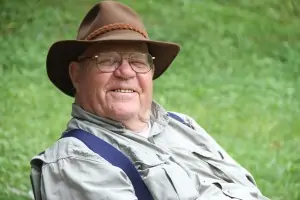
Legendary Coach Hank Norton
Through gifts from family, friends, and former football players of Coach Wilbert Henry “Hank” Norton, an endowment honoring Coach Norton’s 34 years of service to Ferrum College has been established.
The endowment will support The Norton Outdoor Adventures, formerly known as Ferrum Outdoors, and will pay tribute to his love of the environment. Norton was an avid fly-fisherman and enjoyed the great outdoors in addition to coaching and mentoring student-athletes.
The program encompasses activities such as disc golf, hiking, camping, caving, skiing, biking, and paddle sports that focus on getting outside and enjoying nature, with an emphasis on safety and learning.
“Throughout our lives, Dad had a reputation as a highly respected football coach. What excites us about the establishment of this [program]…is that it honors his actions as a leading citizen-advocate for clean water and a clean environment,” wrote Norton’s children, Pattie Norton Gunter, Will Norton, and Jack Norton, in a statement of support.
“I am incredibly grateful for Coach Norton’s family as well as his former players and friends who came together to make this happen,” said Vice President for Institutional Advancement and External Relations Wilson Paine. “The Norton Outdoor Adventures is a fitting tribute to Coach Norton’s contributions to Ferrum College outside of football, and this endowment solidifies Ferrum’s commitment to providing our students the opportunity to explore the natural environment and develop a deeper appreciation for the outdoors.”
Norton, who passed away on January 16, 2019 at the age of 91, has been described as tough but caring, leading Ferrum College into post-season playoff runs, winning titles, and coaching 46 All-Americans during his career at the College.
Learn more about Norton Outdoor Adventures here.
Learn more about Coach Norton here.
If you would like to donate to the Norton Outdoor Adventures program, please visit www.ferrum.edu/giving, or contact the Office of Institutional Advancement by calling 540-365-4211 or emailing advancement@ferrum.edu.
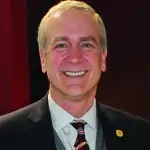 (June 24, 2020) No words, no official statements, no acts of contrition are sufficient in this moment of our history, because nothing can erase generations of pain and oppression. Nothing we can do will ever undo what has been done.
I am heartbroken by the violence of injustice that results in senseless death decimating families and dashing the hope of mothers who must bury their children.
And I am heartbroken by the violence that erupts when injustice persists and those crushed by its weight cry out, “enough.”
We pass through cycles, it seems, from complacency to consciousness to outrage to acceptance to complacency once again. I want to believe that at some point, in one of the passes through the cycle, we will break free and live more enlightened lives. However, I am afraid that this cycle is a slow spiral with occasional plateaus of improvement.
Perhaps our work is to hasten the movement of the cycle, speed it up and advance us more steadily toward a place of justice and being “one nation under God.”
Without a doubt, colleges and universities have contributed to inequity and injustice through the years, keeping certain groups at the top and limiting opportunity for others. Privileged faculty teaching the children of privilege has assured the continuation of class stratification.
The recent admissions scandals unveiled just how much privilege and legacy stay alive at the hands of an unscrupulous few–an entire shadow industry that profits on keeping the poor and less well connected from advancing.
However, while being far from perfect, our colleges are one of the few places left in society that intentionally bring together people from many backgrounds, ethnicities, religions, and ideological perspectives to discuss, debate, and discover. We don’t always get it right, but the world would be poorer, more monolithic, and less understood without them. In fact, the difficult conversations we need to repair ruptured relations and to build a more just future, are conversations that our colleges could help facilitate–not lead, but facilitate.
Some, like Ferrum College, are leveling the playing field for minority students, those from economic disadvantage, and the women and men who are the first in their family to attend college. Rather than profit from meritocracy, we have launched generations of young people into the middle class and into lives of responsible citizenship.
Today, students at Ferrum College are nearly 50% minority, a much greater percentage than at many of the big brand universities. For decades, the College has provided opportunity when opportunity has been denied, and the lives of thousands of families have been changed for the better because of it. In a concrete and real way–not in empty promises or slogans–we live a motto that calls us to put the welfare of others before our own: “Not Self, But Others.”
No one would ever claim we have it figured out or that we are a community without blemish. We are evolving and certainly have our blind spots. And while we cannot erase the injustices that have befallen people of color, sexual minorities, children of economic need or educational disadvantage, or others who have been shut out and turned away, Ferrum College has been at the forefront of providing opportunity for anyone committed to working hard and for anyone committed to building a future with room enough for us all.
This column by President David Johns appeared in The Roanoke Times and The Franklin News-Post. President Johns may be reached at president@ferrum.edu.
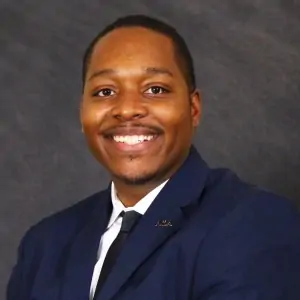
Alumnus Ra’meer Roberts ’13
Alumnus Ra’meer Roberts of Richmond, VA, has established a scholarship for African-American students at Ferrum College.
The Black American Scholarship for Empowerment, or B.A.S.E., will give an annual gift of $250 to one male and one female African-American student at Ferrum College, to be used for books and supplies. Recipients must live on campus, be enrolled full-time, be in good academic standing with a GPA of 2.5 or higher, and demonstrate a financial need.
“According to national studies, African-Americans have the lowest graduation and retention rates in higher education among other ethnic groups. This statistic is primarily due to two factors: financial stability and first-generation status,” explained Roberts. “Based on the current social climate of our country and the financial strain on our colleges and universities from the [novel coronavirus] pandemic, I felt a need to assist African-American students in their pursuit of a good, quality education.”
Roberts has firsthand knowledge of these statistics because he has worked in higher education for over six years, currently serving as the coordinator for Student Conduct at Virginia State University.
Originally from Paterson, NJ, Roberts graduated from Ferrum College in 2013 with a degree in business administration. He went on to earn his Master of Educational Leadership from Virginia Commonwealth University and is currently pursuing his doctoral degree with the intention of continuing his career in higher education as a dean of students. Roberts’ long-term goal is to become a vice president or provost for student affairs.
“It’s been an honor to work with Ra’meer in establishing this important scholarship. I’ve been so impressed with his compassion and the responsibility he feels towards our students and Ferrum’s future,” said Vice President for Institutional Advancement and External Relations Wilson Paine. “His commitment to turn words into action is an inspiration to us all.”
Learn more on the B.A.S.E. Facebook page.
To make a gift to B.A.S.E., click here, then click the ‘give now’ button, designate ‘other’ in the dropdown menu and type ‘B.A.S.E.’ in the designation box.
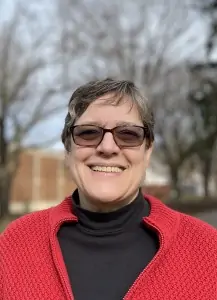
During the College’s virtual commencement celebration held on May 9, 2020, Associate Professor of Social Work Jennie West was named the 2020 recipient of the Exemplary Faculty Award. West retired from the College last month after 25 years of service.
The Exemplary Faculty Award is designated for a full-time faculty member at Ferrum College who embodies excellence in and commitment to teaching; demonstrates concern for student welfare in areas beyond academic studies; is recognized as a competent scholar; and provides services to the College, their profession, and the greater community.
West received numerous nominations and was described by a College community member as someone who “always leads by example, educates future professionals, challenges them and opens their perspectives to different world views to make them more observant, knowledgeable, and open minded individuals as they grow and learn through their journey and education at Ferrum College.”
One of West’s former mentees said, “Whenever I felt lost, I knew that I could always confide in my mentor and I knew that I was heard. I felt that I had a friend on campus… [West] not only educates, empowers, and advocates for students, but is always encouraging students to do what is best for the community.”
Click here to watch the virtual commencement ceremony during which West was honored.
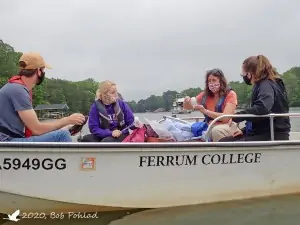
Ferrum College students work with Professor of Environmental Science Delia Heck during the 34th season of the Water Quality Monitoring Program. Left to right: Samuel Chappell; Michelle Musick; Delia Heck; and Chelsea Zizzi. Bob Pohlad photo.
Last week, the Smith Mountain Lake Association (SMLA) and Ferrum College Water Quality Monitoring Program began its 34th season. Since 1987, Ferrum College has worked with the SMLA to perform periodic testing of the lake water to help keep swimmers and boaters safer.
The Ferrum College portion of the team is made up of Program Director and Professor of Environmental Science and Natural Science Division Chair Delia Heck; Senior Scientist and Retired Professor Emeritus of Chemistry and Environmental Science David Johnson; Senior Scientist and Retired Professor Emeritus of Biology and Horticulture Bob Pohlad; Program Scientist and Assistant Professor of Biology and Horticulture Clay Britton; and Laboratory and Field Coordinator Carol Love.
Heck took over the director’s position after the January 2020 death of former Program Director and Retired Professor Emeritus of Environmental Science Carolyn Thomas. Thomas helped found the program.
This year, the team also consists fifty-four citizen scientists at Smith Mountain Lake who volunteer their time, and five paid Ferrum College student interns: senior Jacob Blaukovitch who is pursing a degree in chemistry, biology, and pre-professional health science (pre-med), with a one health minor; senior Lexi Davidson who is majoring in environmental science and minoring in biology; senior Michelle Musick who is earning an environmental science degree; senior Samuel Chappell who is majoring in environmental science and plans to graduate this December; and junior Chelsea Zizzi who is pursing a major in chemistry with a minor in English.
The Water Quality Monitoring Program is a labor of love for the Ferrum College team as it commands many hours during the summer months. “We test for bacteria every two weeks at fourteen sites with two stations at each site,” explained Heck. “We conduct depth profiles at five sites every two weeks. Our volunteers monitor and interns collect samples at fifty-six lake sites and twenty-two tributaries for trophic status monitoring.”
The team tests for e-Coli and other harmful bacteria. They also monitor algae biodiversity, watching for harmful algal blooms.
This year’s testing is even more complex than previous years due to COVID-19 restrictions. Heck said the team has developed safety protocols, including restricting interactions in the testing lab and with volunteers, implementing virtual training videos, rigid sanitizing, social distancing, wearing masks, and taking their temperatures daily. Each team member and volunteer also uses their own equipment including hand sanitizer, pens, personal flotation devices, and more.
Heck explained that water quality testing is not only important to keep swimmers and boaters safe, but is also an indicator of challenges in our environment. “Water is essential to our life on Earth. We face a changing climate and the interconnectedness between humans, health, and the environment are made clearer every day,” said Heck. “The project will continue to serve as an early warning sentinel as well as a model for how to to work collaboratively with our neighbors in living out our motto of Not Self, But Others. The partnership with the business sector, state government, and community exemplifies the very best Ferrum College has to offer our region.”
***
The 34th season of water quality monitoring has been dedicated to Carolyn Thomas, founding member of the program and beloved Ferrum College professor. The following statement was sent to this year’s citizen scientists in her honor:
“The Smith Mountain Lake Association and Ferrum College Water Quality Monitoring Program are dedicating the 2020 monitoring season to the memory of Dr. Carolyn Thomas, one of the founders of the program. Carolyn passed away in January after a courageous two-year battle with cancer. Carolyn’s passion for water quality was evident every time she ventured out on the lake. You can see that demonstrated in this interview with John Carlin from a few years ago.
“One of the traditions of the College’s sampling trips is to count great blue herons, Carolyn’s spirit animal. From now on when one is sighted we hope you will be reminded of Carolyn’s passion, her dedication to Smith Mountain Lake, and her love of citizen scientists like yourselves.”
Read more about the Smith Mountain Lake Association and Ferrum College Water Quality Monitoring Program here.
Ferrum College welcomes gifts made to the Carolyn Thomas Memorial Fund which supports students in the College’s Division of Natural Sciences. Please click here to make a gift in Thomas’s honor.
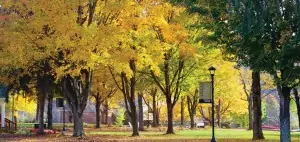 President David Johns updated the campus community regarding plans for fall 2020 in the letter, below.
Dear Ferrum Family,
On Saturday, May 9, we honored 200 graduates at our first ever virtual commencement ceremony. I am proud of our faculty, staff, and especially our students who showed remarkable perseverance this semester to reach this milestone. Although it was not the commencement any of us expected, it was nevertheless filled with joy, celebration, reflection, and hope as the class of 2020 turned its sights toward the future.
At Ferrum College, we are also looking toward the future, and have already begun planning for Fall 2020. While the COVID-19 crisis will alter higher education for the foreseeable future, we are committed to our mission of providing an educational experience that fosters intellectual curiosity and prepares students for meaningful lives and careers.
To that end, I am pleased to announce that we intend to reopen our campus this fall, to offer on-site instruction, and provide a residential experience for our students.
We are in the process of developing social distancing and safety protocols to ensure a safe campus environment, and we will continue to seek the guidance of our public health experts. While we are optimistic about returning to campus, we will not do anything to jeopardize the health and well-being of our students and community; thus we will provide regular updates throughout the summer about returning to campus, housing, athletics, classes, and more.
To provide more flexibility, fall semester will be divided into two terms, with classes beginning on August 25. Students will receive detailed information pertaining to their fall course registrations in the coming weeks.
Other changes will include:
This is an unprecedented time for many of us, but it is not unprecedented for our College. Founded on the eve of World War I, Ferrum has endured challenging times since its inception. And for over 100 years Ferrum responded to times of uncertainty with resilience (#FerrumMeansIron), commitment to each other (#NotSelfButOthers), and strength (#FerrumStrong).
The grit and determination that has sustained us in the past will carry us into the future. The values that have inspired the Ferrum Family for decades, inspire us still. We have not so much encountered an obstacle these past few months, as we have reached a turning point; this fall we begin a new chapter in the Ferrum story, and I invite each of you to be part of it.
With Panther Pride,
David L. Johns, Ph.D.
President

Tabatha Chitwood ’19, a third grade teacher at Ferrum Elementary, transitioned to virtual learning in March due to COVID-19.
Alumna Tabatha Chitwood ’19 knew she was always meant to be a teacher.
“I did a co-op my senior year [in high school] and loved it, but I had children first before going to college,” she explained. Chitwood spent her pre-college years working as a restaurant manager, server, and bartender, but never lost her drive to educate children.
She attended Virginia Western Community College for regular classes, and dabbled with becoming a nurse, but ultimately decided to pursue her teaching dream by enrolling as a non-traditional student in Ferrum College’s teacher education program. She graduated in May 2019 with a bachelor’s degree in liberal arts.
“I was a single mother of two boys that played soccer and football. I was busy working two jobs full-time. But I found balancing everything easy because I am used to doing everything on my own,” she said.
In fact, Chitwood found higher education to be so manageable and worthwhile, she has enrolled at Liberty University to pursue a master’s degree in administration and supervision, with the goal of eventually becoming a principal or administrator. “But I will be teaching for a long time first, because I enjoy it,” said Chitwood.
After graduating from Ferrum, Chitwood was hired as a third grade teacher at Ferrum Elementary School.
“It was evident from the first day of school that Tabatha made instant connections with her students and throughout the year formed a bond that helped every student be successful,” said Jennifer Talley, principal at Ferrum Elementary. “Her classroom is a fun and engaging place for students to learn. She provides a variety of hands-on activities to enrich the learning experience for every student.”
Little did Chitwood know that her first year teaching would be so unusual. On March 13, 2020, Franklin County Public Schools closed abruptly for the remainder of the school year to tamp down the spread of the novel coronavirus, or COVID-19.
“Transitioning to virtual learning was hard,” said Chitwood. “We continued using Google Classroom, which is something that we did from the first week of school. That part was easy. Technology is easy and fun for me. The hard part was not seeing my students in person.”
“I am sure she never expected her first year of teaching to transition so quickly from a typical classroom to a virtual classroom. Not only did Tabatha accept the challenge, she embraced the opportunity to provide the richest experiences for all of her students,” said Talley.
Chitwood worked diligently to conduct weekly Google Meets for her students to stay in touch. She also made the work interactive, assigning virtual field trips and hands-on projects like building solar ovens so students could harness the sun’s power to make s’mores.
She said transitioning to virtual learning during her first year of teaching went smoothly, thanks in part to the teaching strategies she learned at Ferrum College.
Chitwood is looking forward to hopefully returning to her in-person classroom in the fall. She is using the summer to continue dreaming up unique and creative ways for her next class to learn, noting “I just hope my students will look back and say I had a positive impact on their lives.”
Learn more about Ferrum College’s teacher education program, including the new elementary education major, here.
(April 8, 2020) As the coronavirus spread across the globe engulfing community after community, our campus grew more quiet. Students began leaving for home–a dozen one day, a hundred the next. Then, staff members joined faculty by working remotely from their own homes. Like musicians walking off a stage, one by one, during a symphony, the music of campus is now only a whisper.
Spending time on a campus that is eerily quiet gives one a lot of time to think. So, what am I learning from an empty campus?
The first thing I am learning is that I don’t like an empty campus! Nearly every day of the year there is activity here, whether it’s classes, or athletic events, or whether it’s guests participating in one of our many camps. Not having what is so common makes its absence felt all the more strongly.
What am I learning? I am learning that we take each other for granted. From one day to the next, we expect to see the familiar faces of coworkers and students, and that expectation can lead to not paying attention to the present moment. For me, busyness leads to distraction, and distraction to forgetting. And, if what I forget is to acknowledge someone or thank him or her, then it can lead to taking them for granted. On an empty campus, I am painfully aware of the times I forgot to say, “thank you.”
What am I learning from an empty campus? I am learning that buildings, and lakes, and athletic fields, and hiking trails, and farms, and residence halls, mean nothing without people. Our students are the soul of the college. They animate these spaces and give them life. Our staff and faculty are the lifeblood that circulates through every artery of activity and connection. This 700-acre oasis is a place where Ferrum College happens, but it is not itself Ferrum College.
What am I learning? I am learning that, in spite of an empty campus, the soul and lifeblood of this community still exist and still pulse strong! We are living in a diaspora, as a scattered people, but we are a people nevertheless. When love binds a group together, distance cannot divide it. Faculty are conducting classes, advisors are advising, staff meet to plan next steps, trivia night still goes on, and some are sharing a drink during after-hours cocktail parties.
All online.
What am I learning from an empty campus? I am learning how much I miss human touch. Here we shake hands; we hug; we sit together and lean in close for good conversation. We literally breathe each other in. This will happen again; but for now, we touch by keeping in touch.
I am inspired by images from Siena, Italy where residents in lockdown took to their balconies to sing, and by images from Plymouth Meeting, Pennsylvania where neighbors join together for group exercise, all while standing in their own front lawn. Nothing is so powerful that it will forever crush the human spirit. Nothing.
What the world will look like on the other side of this pandemic is anyone’s guess. We can be sure, however, that it will not be what it once was. What we will need — community, connection, determination, imagination — all are simple things, really, but the kind of things that hold life together.
We will need each other as we rebuild our communities, our economy, and our lives. This lesson is everywhere evident, especially in the music of a springtime breeze that moves along the Blue Ridge and out across the silent acres of an empty campus.
This column by President David Johns appeared in The Roanoke Times and The Franklin News-Post. President Johns may be reached at president@ferrum.edu.
Over the last month, Ferrum College staff members have added more responsibilities to their already full spring schedules during what President Johns has coined a “diaspora”, a scattering of the Ferrum family in an attempt to social distance during the novel coronavirus (COVID-19) pandemic.
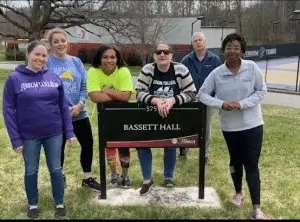
Office of Student Life & Engagement
Office of Student Life and Engagement
In addition to learning how to provide their normal services electronically, the Student Life and Engagement staff are also closely monitoring student traffic on campus, which includes keeping track of those who are leaving and when. This office is also charged with enforcing campus policies, taking care of anyone who is sick*, and following up with students in crisis. Staff members are also working to prepare buildings for consolidation and to turn some buildings over to public safety in the event that additional housing is needed for various purposes.
Dean of Student Life Nicole Lenez is grateful to work with such capable staff in such an unprecedented time. She noted her admiration for Archbishop Desmond Tutu and his explanation of the African word “ubuntu”, which loosely translates into a concept of being generous, hospitable, friendly, caring, and compassionate.
“The Student Life and Engagement team has ‘ubuntu’,” said Lenez. “They are the embodiment of ‘Not Self, But Others’. They’ve worked tirelessly and without hesitation through this crisis. Their compassion, honesty, and creativity has been so appreciated as we navigate uncharted waters and their love for Ferrum College and the students has carried us when we needed it. There are no words that can truly express the gratitude I have for them and the work they’ve been doing, especially lately.”
*There are no positive cases of COVID-19 on Ferrum College’s campus at this time.
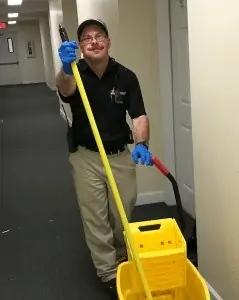
Lonnie Thompson prepares Clark Hall for student consolidation.
Physical Plant Department
The Physical Plant Department includes Housekeeping, Grounds, Maintenance, and the Mail Room staff. In addition to their normal cleaning routine, Housekeeping is focusing on disinfecting common areas and frequently touched objects like doorknobs and light switches. Floors have been stripped and waxed, and Clark and Dyer Halls have been prepared to consolidate students still on campus.
Maintenance has completed a number of preventative tasks and continues to meet student, faculty, and staff needs by keeping building systems operational. The Grounds crew is working hard to keep campus beautiful by mowing, planting, mulching, trimming, and preparing for the day our students, families, and guests return. Our Mail Room staff continues to ensure students, faculty, and staff receive mail and packages in a timely manner.
“I have so much respect for the Physical Plant staff at Ferrum College,” said Director of Physical Plant Brad Bishop. “I cannot say enough good things about each person in the department. For them to come to campus every day during these most uncertain times is a testament to their character. They truly care for Ferrum College, its students, its faculty, its staff, and the entire Ferrum community. These folks work so hard day in and day out, and I have been so unbelievably blessed just to be a part of this team.”
Office of Admissions
Due to Governor Northam’s Executive Order requiring Virginians to shelter-in-place, and to protect faculty, staff, students, and the community, the Office of Admissions has suspended all campus tours. Instead, this office has developed virtual tours which take viewers all over campus, from Vaughan Chapel, to the Norton Center, and through the residence halls.
Prospective students who participate in these online events can qualify for the Campus Visit Scholarship, which provides a $1,000 scholarship per academic year. The Admissions Office has moved the decision deadline to July 1 to give more time to prospective students and their families due to the unusual circumstances brought about by COVID-19.
Financial Aid counselors are holding one-on-one appointments with students through Zoom. This department is also using the go-live FaceBook feature as a platform to inform families about the financial aid process.
“We are working closely with faculty, coaches, and other departments on campus to create alternative pathways for prospective students to explore Ferrum College. We are adjusting to the changing times each day, and I am proud to work with such a capable and invested group of people,” said Dean of Admissions Jason Byrd.
Visit campus virtually on the Experience Ferrum webpage! By clicking here, viewers can take a tour of campus, learn more about the College’s online graduate programs during a virtual Graduate Program Open House scheduled for April 15 at 1 p.m., and explore academic programs and hear from program coordinators.
(March 4, 2020) There is a lot of talk in Richmond and Washington, D.C. these days about the need for a skilled workforce. Without a doubt, there are gaps in trades and professions that must be filled if we are to build a good future for ourselves and for our children, and must be filled if our country is to be a global economic leader.
To hear some of the discussion, what we need to do is simply to train young people for specific high-demand jobs. In fact, a national campaign is underway, led by the Ad Council, in close association with IBM, Apple and the White House, to promote this very idea and to encourage alternatives to college. We have statewide incentives to fund workforce development, which very often means programs that teach specific skills to match the needs of industry at the present moment.
This is important. However, a skilled workforce is not the same as a prepared workforce.
In all the clamor for skills training something is missing, and that something is a demand that colleges of all types prepare students to be responsible citizens. Women and men who are informed, involved, who act with civility, humanity and who care about the future, they are crucial for the health of our country. Although education may be preparation for good work, it is so much more.
And yet, nearly every day I hear someone questioning or dismissing the value of education (even from among some talking heads who have Ivy League degrees!). It is true, of course, that one can make a living without going to college, although an average college graduate will earn $1 million more in his or her career than an average high school graduate. And yes, $1.5 trillion in student loan debt is too much; however, very few folks seem concerned about the overall amount of consumer debt, which is nine times higher and often leaves us little to show for it.
At the end of the day, if we do not take care of our democracy then having a robust economy is meaningless. Who benefits, after all, if many of our skilled workforce are denied an opportunity to learn about our history and about the ideals that gave rise to this great nation? Who benefits if only a handful of areas of study pay attention to preparing citizens? Who wins if we reject the importance of education that forms such people?
For the benefit of us all, our society needs as many people as possible who can think critically and ask questions, who understand where we came from, and who care about how a free nation should act in order to remain free.
This is why one of the goals of our strategic plan at Ferrum College is to “prepare citizens committed to integrity and service.” It’s because citizenship is the work of us all, and not the work of a few. Every one of our faculty, staff, and students can tell you that we are serious about our motto, “Not Self, But Others,” and that we believe it teaches us how we ought to live.
So, let’s build a strong workforce. Let’s provide women and men the skills necessary to build good lives and a strong economy. And, let’s be sure that our skilled workforce is also a prepared workforce, ready to live free and ready to live as responsible citizens.
This column by President David Johns appeared in The Roanoke Times and The Franklin News-Post. President Johns may be reached at president@ferrum.edu.